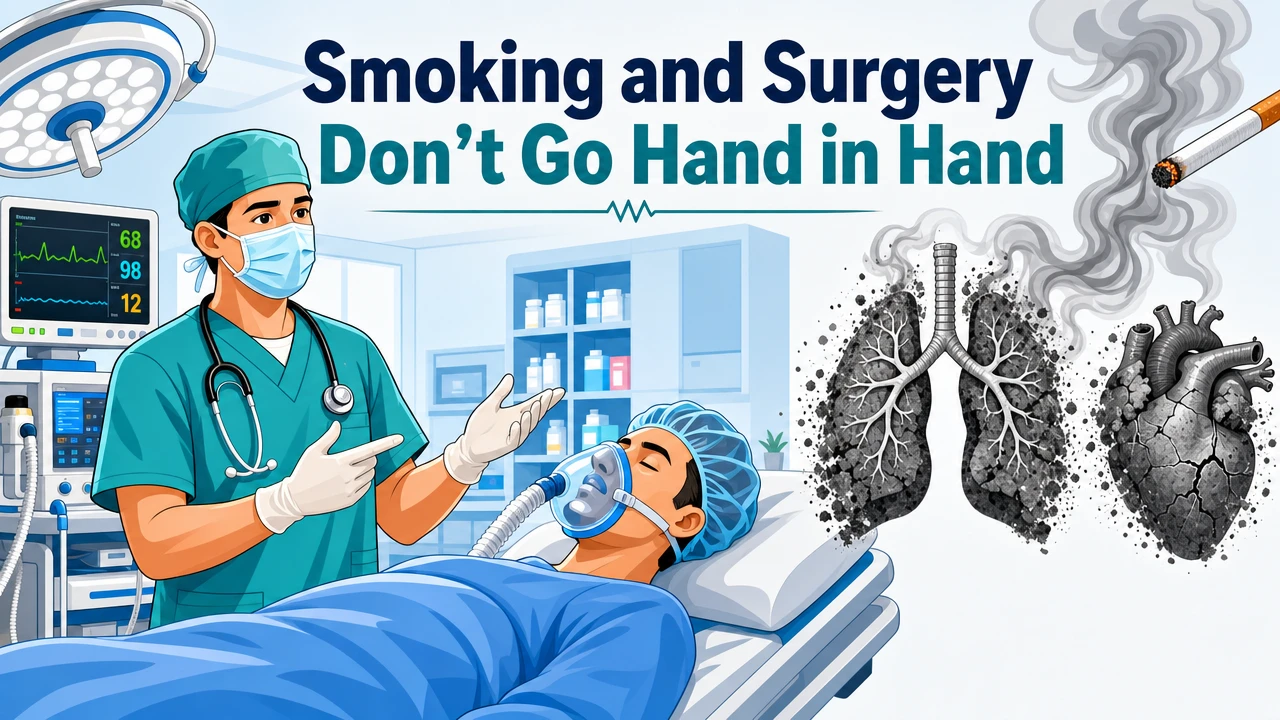
Smoking affects much more than just the lungs. It can also harm the heart, blood vessels, immune system, and wound healing. If you are planning to undergo surgery, smoking can increase the risks related to anesthesia and recovery.
The good news is that quitting smoking before surgery can greatly improve your safety and help you recover faster.
Why Smoking Is a Problem During Surgery
Cigarette smoke contains thousands of harmful chemicals. Two of the most important during anesthesia are:
- Carbon monoxide
- Nicotine
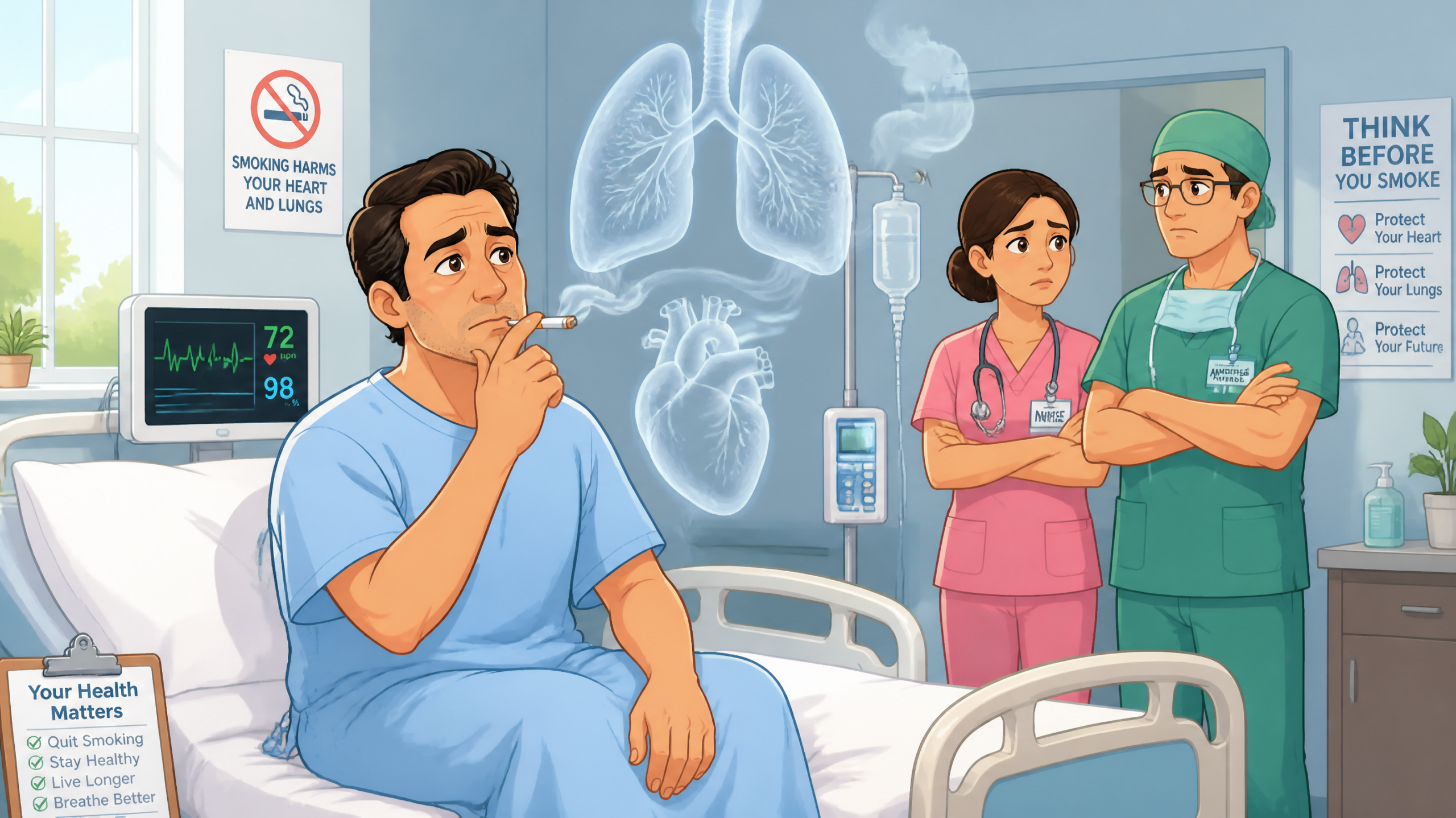
Carbon Monoxide Reduces Oxygen Supply
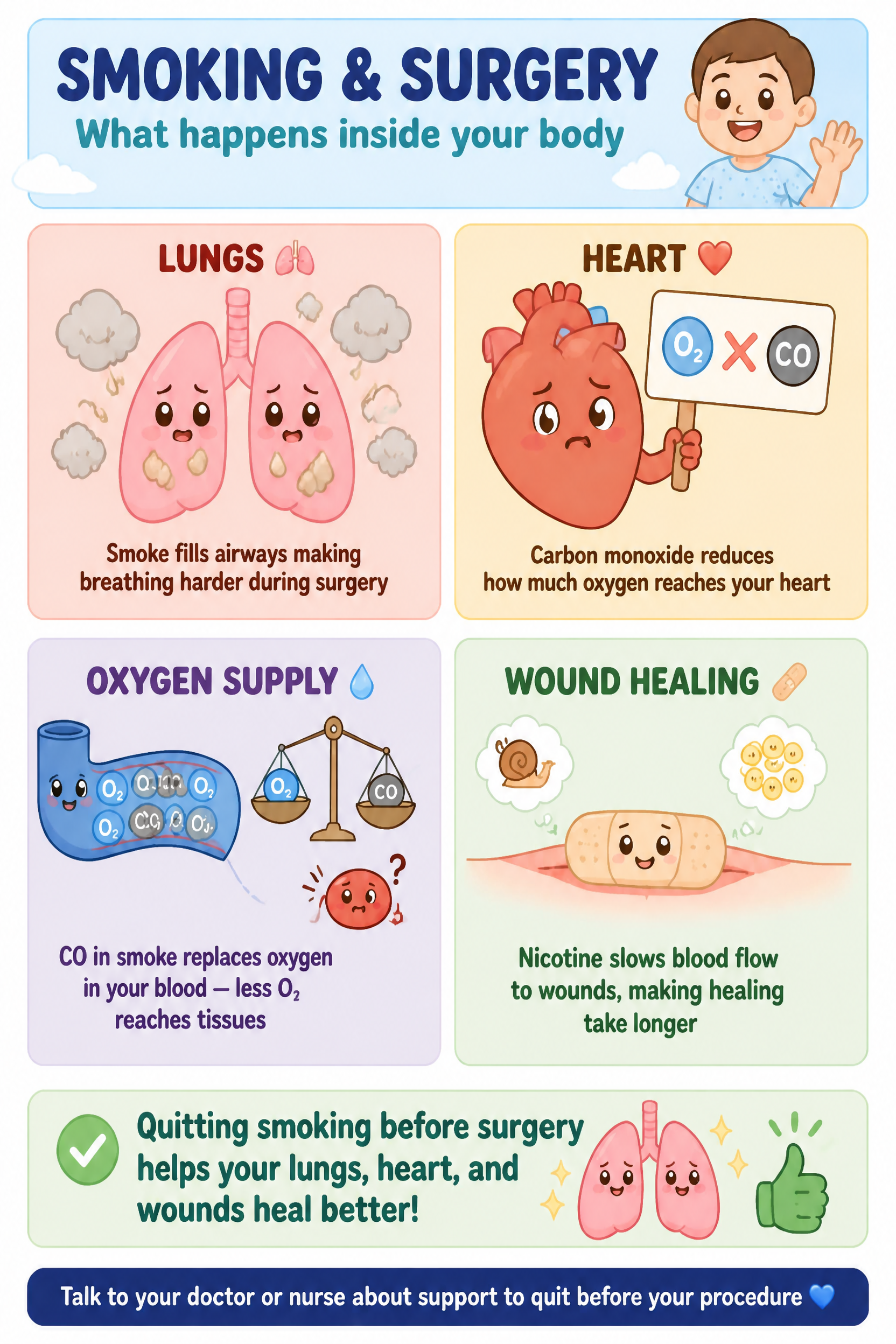
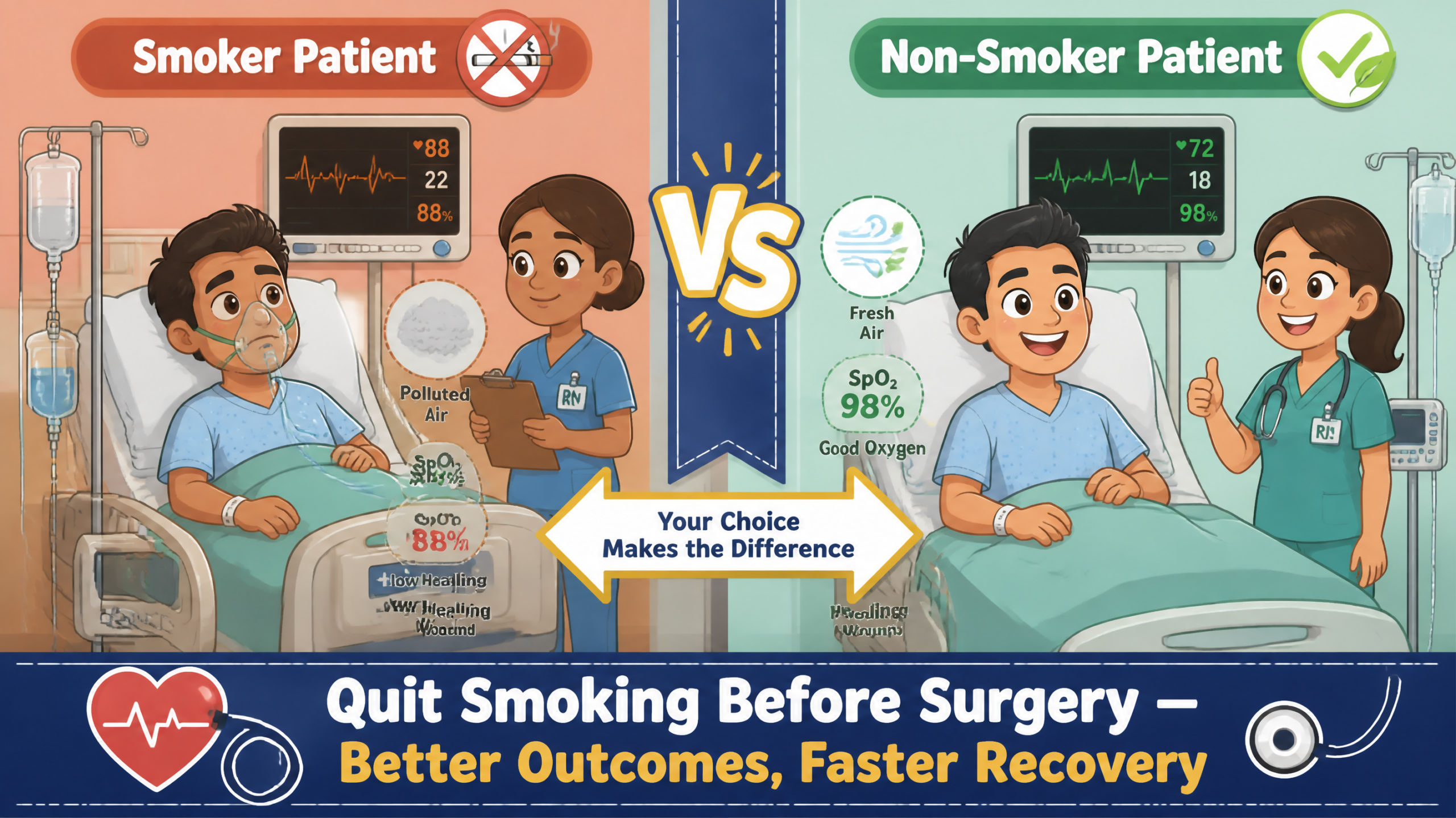
Carbon monoxide sticks to hemoglobin in the blood much more strongly than oxygen does. This reduces the amount of oxygen your body can carry to important organs during surgery.
As a result:
- The heart and brain may receive less oxygen
- Healing becomes slower
- Surgical complications become more likely
Nicotine Affects the Heart and Blood Vessels
Nicotine causes:
- Increased heart rate
- Higher blood pressure
- Narrowing of blood vessels
This can increase the risk of:
- Heart attack
- Stroke
- Heart failure
- Poor wound healing
How Smoking Affects the Body Before Surgery
1. Effects on the Lungs and Breathing
Smoking damages the lungs by:
- Increasing mucus production
- Making secretions thicker
- Reducing the lungs’ natural cleaning system
This can lead to:
- Coughing and sputum retention
- Pneumonia
- Breathing difficulty after surgery
- Increased need for ICU care
It also makes anesthesia and airway management more difficult.
2. Effects on the Heart
Smokers have a much higher risk of heart disease.
During surgery:
- Nicotine makes the heart work harder
- Carbon monoxide reduces oxygen supply
This creates extra stress on the heart during anesthesia.
3. Effects on the Stomach
Smoking can increase acid reflux by relaxing the food pipe valve.
This raises the risk of stomach acid entering the lungs during anesthesia, which can be dangerous.
Does Quitting Smoking Before Surgery Really Help?
Yes — definitely.
Research shows that stopping smoking before surgery lowers the risk of complications. The earlier you quit, the greater the benefits.
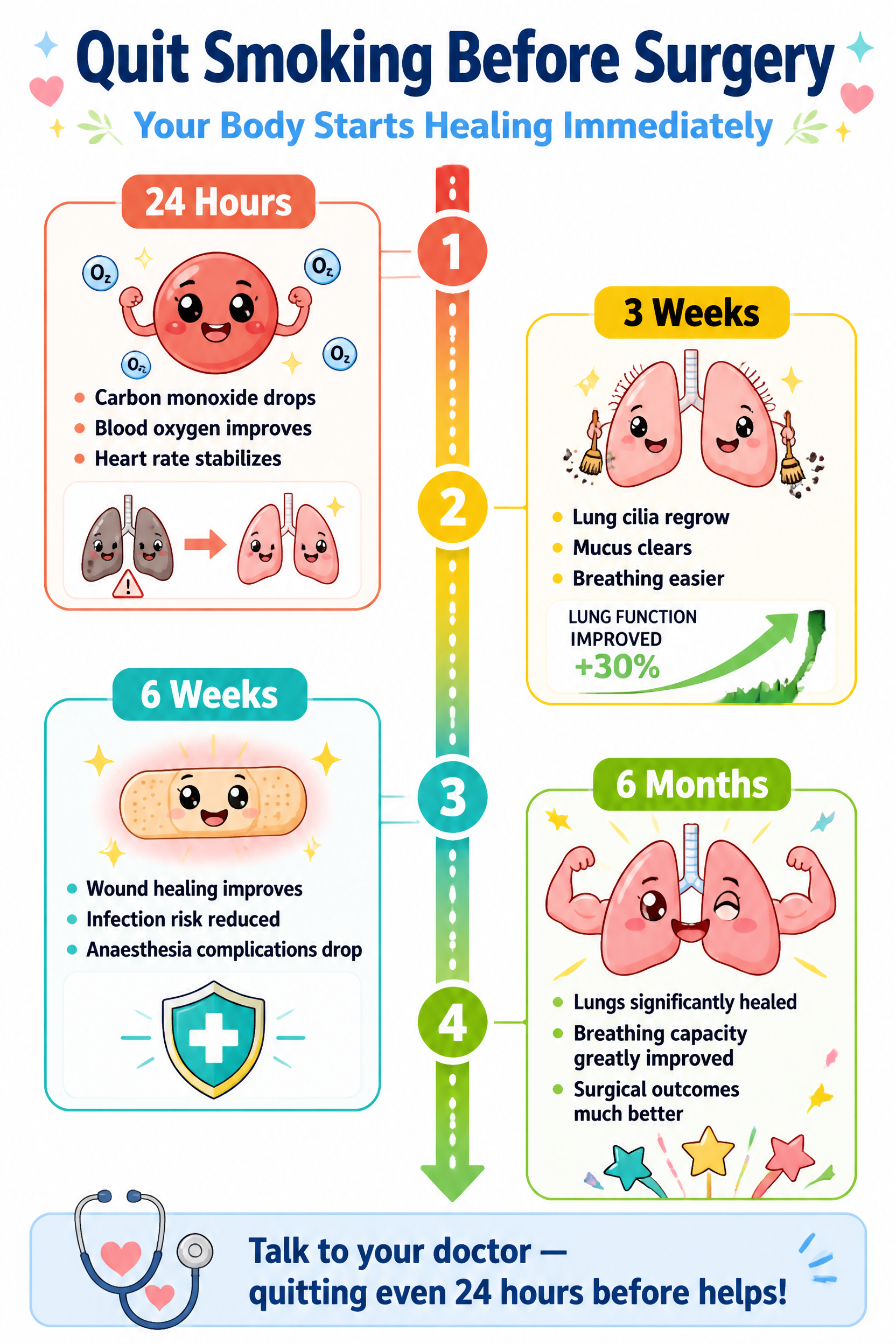
Benefits of Quitting Smoking Before Surgery(1)
| Time After Quitting | Benefits |
|---|---|
| 24 hours | Carbon monoxide and nicotine levels begin to fall, improving oxygen delivery |
| 3 weeks | Better wound healing and fewer wound infections |
| 6–8 weeks | Improved lung function and less mucus production |
| 6 months | Improved immune system function |
Common Surgical Complications More Common in Smokers
People who smoke have a higher risk of:
- Pneumonia
- Breathing problems after surgery
- Poor wound healing
- Surgical site infections
- Heart complications
- ICU admission
- Delayed recovery
- Longer hospital stay
Is It Too Late to Quit Just Before Surgery?
No.
In the past, doctors worried that stopping smoking only a few days before surgery might increase mucus production. However, current studies do not show clear evidence of harm.
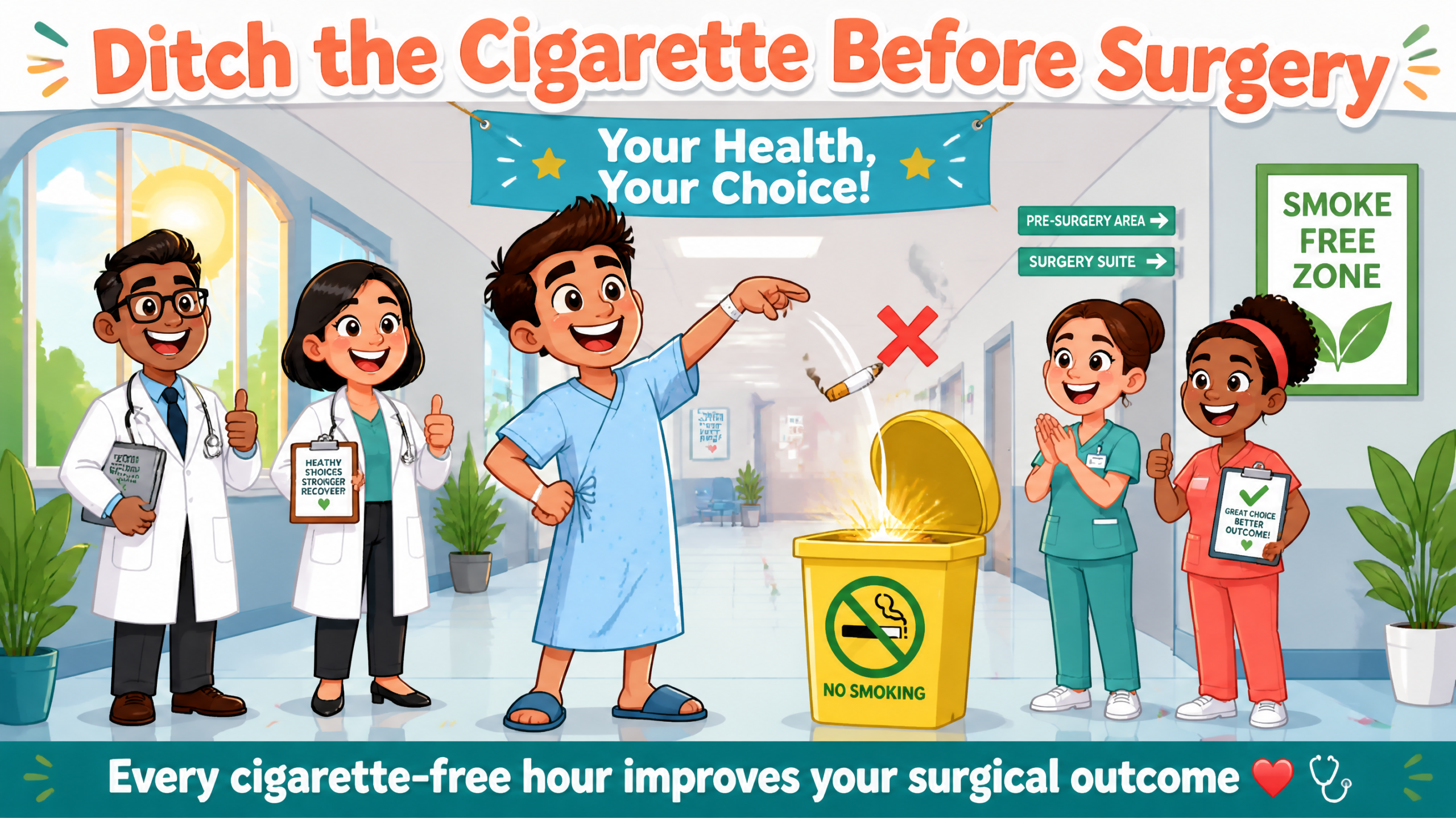
Experts now recommend quitting smoking at any time before surgery — even on the day of surgery if possible.
Treatments That Can Help You Quit Smoking
Nicotine Replacement Therapy (NRT)
These provide nicotine without harmful cigarette smoke and help reduce cravings.
Available forms include:
- Nicotine patches
- Nicotine gum
- Lozenges
- Nasal sprays
Bupropion
This is a prescription medicine that may help by:
- Reducing cravings
- Improving mood
- Decreasing withdrawal symptoms
Varenicline
One of the most effective medicines for quitting smoking.
It works by:
- Reducing cravings
- Making smoking less pleasurable
Final Message
Smoking increases the risks of anesthesia and surgery by affecting the lungs, heart, oxygen supply, immunity, and wound healing.
But quitting smoking — even shortly before surgery — can make a real difference. The sooner you stop, the safer your surgery and recovery are likely to be.
If you are preparing for surgery, quitting smoking may be one of the most important steps you can take for your health.
Disclaimer: This article is for educational purposes only and should not replace professional medical advice. Always follow the recommendations of your surgeon, anesthesiologist, and healthcare provider regarding smoking cessation.
References
Australian and New Zealand College of Anaesthetists. Guideline on smoking as related to the perioperative period. PS12.2014