
What Is Diabetes?
Diabetes is a condition in which blood glucose (sugar) levels become too high because the body either does not produce enough insulin or cannot use insulin effectively.
To understand it let's take following example:
Imagine Your Body as a large, busy society made up of millions of houses.
Each cell is a house.
Glucose is the fuel supply that each house needs to produce energy.
Insulin is the key that helps open the house door so glucose can enter.
After you eat, food is broken down into glucose (sugar). The glucose enters your bloodstream and travels around the body, delivering fuel to different cells.
But glucose cannot simply walk through the cell's door.It needs a key ( Insulin). Insulin helps it enter the cell, where it can be used to produce the energy your body needs.
So, what happens in diabetes?
Imagine that fuel trucks are delivering plenty of fuel to the society (mentioned in above example), but the houses cannot bring the fuel inside.
There can be two main reasons:
Type 1 diabetes— No key
The body produces little or no insulin. It's like having houses with locked doors but no keys. Glucose remains outside in the bloodstream,so body can't utilise excess of sugars.
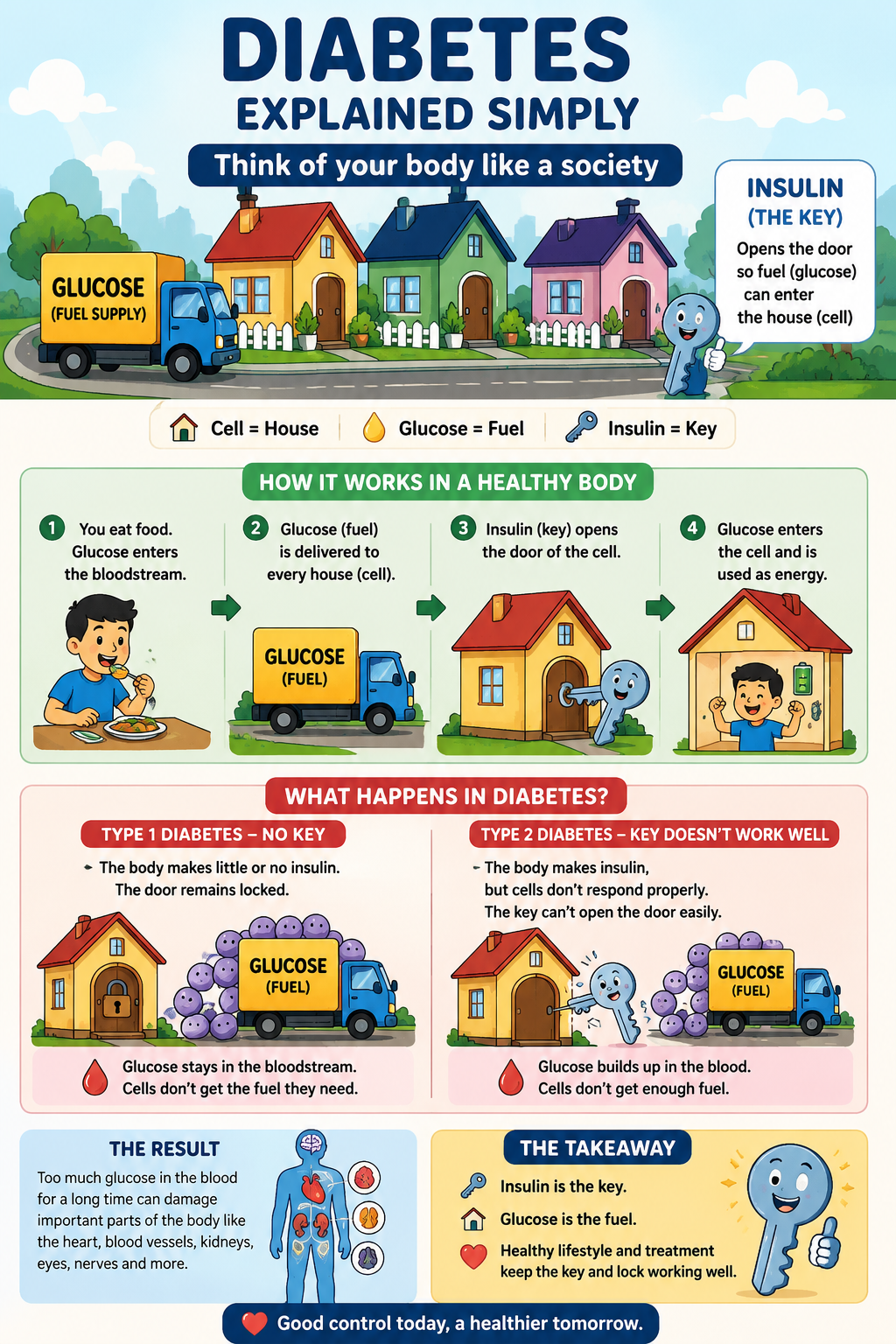
Type 2 diabetes— The key doesn't work properly.
The body still produces insulin, but the cells become less responsive to it. It's like having the right keys, but the locks have become difficult to open. More and more insulin may be needed to get glucose into the cells.
The result
Your blood sugar rises while your body's cells are left short of the
energy they need.
Over time, this excess sugar doesn't just remain in the bloodstream—it can damage blood vessels, nerves, kidneys, eyes, and the heart, and may also slow down wound healing. This is one of the main reasons why diabetes is an important consideration before surgery.
What Are the Symptoms of Diabetes?
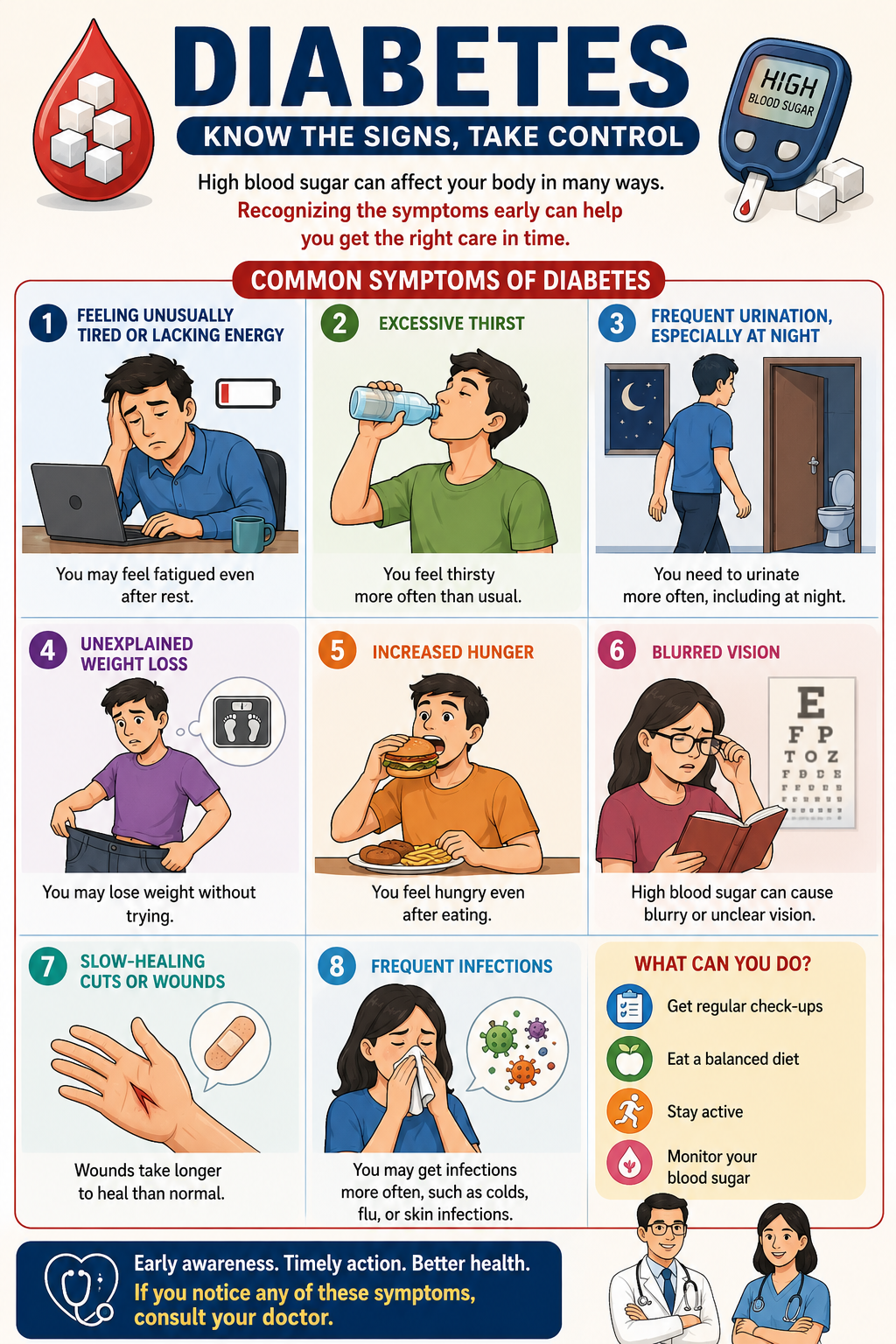
Many people develop diabetes gradually and may not notice any symptoms initially. When symptoms appear, they commonly include:
- Feeling unusually tired or lacking energy
- Excessive thirst
- Frequent urination, especially at night
- Unexplained weight loss
- Increased hunger
- Blurred vision
- Slow-healing cuts or wounds
- Frequent infections
If you experience these symptoms, it's important to have your blood
sugar checked.
How Do Doctors Diagnose Diabetes?
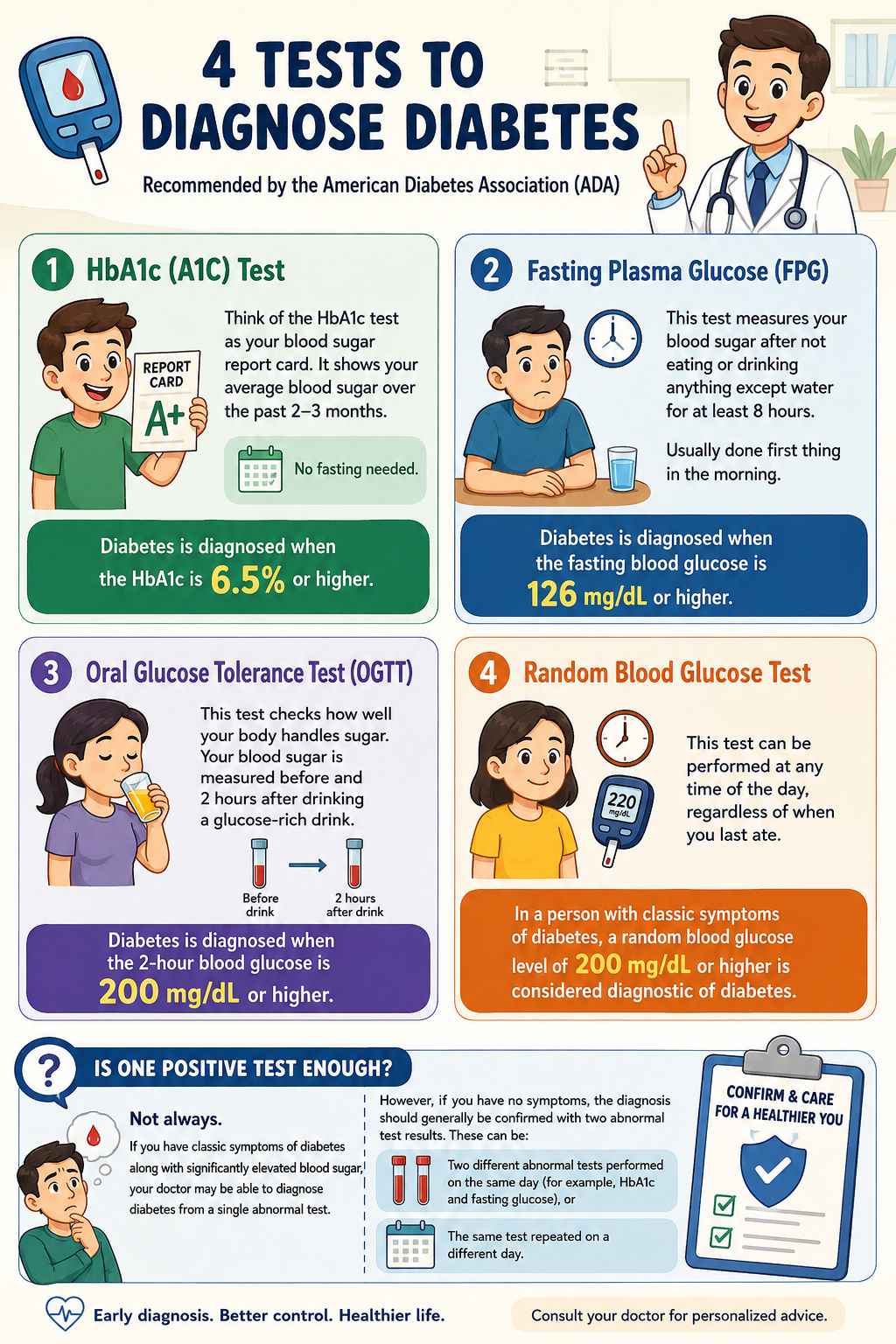
The American Diabetes Association (ADA) recommends four tests that can be used to diagnose diabetes.
HbA1c (A1C) Test
Think of the HbA1c test as your blood sugar report card. Instead of showing today's blood sugar, it reflects your average blood sugar over the past 2–3 months.
The best part is that you don't need to fast before this test.
Diabetes is diagnosed when the HbA1c is 6.5% or higher.
Fasting Plasma Glucose (FPG)
This test measures your blood sugar after not eating or drinking anything except water for at least 8 hours. It is usually performed first thing in the morning.
Diabetes is diagnosed when the fasting blood glucose is 126 mg/dL or higher.
Oral Glucose Tolerance Test (OGTT)
This test checks how well your body handles sugar. Your blood sugar is measured before and 2 hours after drinking a glucose-rich drink.
Diabetes is diagnosed when the 2-hour blood glucose is 200 mg/dL or higher.
Random Blood Glucose Test
This test can be performed at any time of the day, regardless of when you last ate.
In a person with classic symptoms of diabetes, a random blood glucose level of 200 mg/dL or higher is considered diagnostic of diabetes.
Is One Positive Test Enough?
Not always.
If you have classic symptoms of diabetes along with significantly elevated blood sugar, your doctor may be able to diagnose diabetes from a single abnormal test.
However, if you have no symptoms, the diagnosis should generally be confirmed with two abnormal test results. These can be:
- Two different abnormal tests performed on the same day (for example, HbA1c and fasting glucose), or
- The same test repeated on a different day.
This extra confirmation helps ensure that the diagnosis is accurate
before lifelong treatment is started.
Why Should We Be Concerned About Diabetes Before Surgery?
Uncontrolled blood sugar can contribute to delayed wound healing and surgical-site infections. These complications may prolong hospital stay and increase healthcare costs.
Patients with poor glycemic control may also have a higher risk of certain cardiac and other complications during the perioperative period.
On the other hand, good glycemic control supports healthy wound healing, recovery, and an uncomplicated hospital stay.
What Happens If You Have Diabetes and Need Surgery?
The approach to surgery in a person with diabetes depends mainly on two factors:
- How urgent is the surgery?
- How well is your diabetes controlled?
Emergency Surgery
If it is an emergency surgery—for example, a life- or limb-saving procedure—and your blood sugar is uncontrolled, surgery may still need to proceed.
In such situations, the healthcare team will explain the additional risks associated with poor glycemic control, which may include delayed wound healing, surgical-site infections, and increased perioperative morbidity.
Elective Surgery
Elective surgery is a procedure that can generally be planned for a later date. If diabetes is poorly controlled, your healthcare team may first optimise your blood sugar using appropriate medications, diet, lifestyle modifications, and other measures.
Once your overall condition and diabetes are appropriately managed, surgery can be planned.
Why Should I Be Worried About High Blood Sugar?
When your blood sugar stays too high or fluctuates significantly, it can damage your blood vessels over time.
Blood vessels are tube-like structures in your body that carry blood to different organs.
Damage to blood vessels can make it easier for fatty deposits, called plaque, to build up inside the arteries. This condition is known as atherosclerosis, sometimes described as "hardening of the arteries."
Atherosclerosis can compromise blood flow to organs such as the heart and brain and increase the risk of cardiovascular disease and stroke.
High blood sugar can also promote inflammation and oxidative stress, which may contribute to blood-vessel injury and cardiovascular risk.
Keeping your blood sugar within the recommended range is an important part of protecting your blood vessels and overall health.
Preoperative Tests for People With Diabetes
The tests required before surgery depend on your age, type and duration of diabetes, overall health, the type of surgery planned, and the findings during your preoperative assessment.
Commonly considered tests may include:
- Complete blood count (CBC)
- Fasting blood glucose
- HbA1c
- Renal function tests
- Liver function tests
- Electrocardiogram (ECG)
- Chest X-ray, when indicated
Apart from these tests, assessment for autonomic dysfunction may also be considered in selected patients. The decision is made by the surgeon, anesthetist, or other members of the healthcare team based on the individual patient's condition.
What Is Autonomic Function?
Autonomic function refers to how well your body's automatic control system works.
Normally, our body has two broad types of control: voluntary and involuntary.
Voluntary control includes activities that you can consciously control, such as moving your hands, feet, neck, and eyes.
Involuntary functions include activities that occur automatically, such as your heartbeat, blood pressure regulation, digestion, and breathing during sleep. These functions are largely regulated by the autonomic nervous system.
The autonomic nervous system regulates important body functions, including heart rate, blood pressure, breathing, digestion, and sweating, without requiring conscious effort.
For example, when you stand up from a sitting or lying position, gravity causes some blood to pool in your legs. This can briefly reduce blood pressure.
In a healthy person, the autonomic nervous system quickly detects this change and responds by increasing the heart rate and tightening the blood vessels. This helps maintain normal blood pressure and adequate blood flow to the brain.
This is why most healthy people do not feel dizzy when they stand up.
In people with long-standing diabetes, autonomic nerves can become damaged. This condition is known as diabetic autonomic neuropathy.
When this happens, the body's automatic response to a fall in blood pressure may become less effective.
As a result, blood pressure may remain low after standing, causing symptoms such as dizziness, light-headedness, blurred vision, or even fainting. This condition is called orthostatic hypotension.
Depending on your diabetes control, duration of diabetes, symptoms, and overall health, your anesthetist may advise tests to assess the functional status of your autonomic nervous system.
Can You Have Surgery If You Have Diabetes?
Yes. Having diabetes does not automatically mean that you cannot undergo surgery.
If your diabetes is appropriately controlled and your overall medical condition has been assessed, elective surgery can usually be performed safely.
Your surgeon and anesthetist will assess your individual risks and optimise your medical condition before the procedure.
What Is the Ideal Blood Sugar Before Surgery?
The American Diabetes Association (ADA) recommends a perioperative target blood glucose range of approximately 100 to 180 mg/dL (5.6 to 10.0 mmol/L) for many patients.
What Is the Ideal A1C Before Surgery?
If you have diabetes and are planning elective surgery, your blood sugar should be reasonably well controlled before your procedure. One of the most important tests is the A1C (HbA1c), which reflects your average blood glucose over approximately the previous 2–3 months.
For many patients undergoing elective surgery, healthcare teams consider an A1C below 8% a reasonable preoperative goal when it can be achieved safely.
Better preoperative glycemic control may be associated with a lower risk of certain surgical complications and better postoperative recovery.
If your A1C is significantly elevated, your healthcare team may recommend improving diabetes control before an elective procedure, when clinically appropriate.
What HbA1c Level Is Safe for Elective Surgery?
There is no single HbA1c value that makes surgery universally "safe" or "unsafe." The decision depends on the patient's overall health, the type and urgency of surgery, diabetes complications, and the ability to optimise glucose control.
A preoperative A1C goal of <8% (<64 mmol/mol) is commonly used when planning elective surgery, particularly when there is time to improve glycemic control.
Your surgeon, anesthetist, and physician should decide whether surgery should proceed based on your individual risk rather than HbA1c alone.
Should You Stop Diabetes Medications Before Surgery?
Some diabetes medications need to be temporarily stopped or adjusted before surgery, but the exact timing depends on the medication, kidney function, type of surgery, fasting requirements, and your individual risk of low or high blood sugar.
Some medications may be withheld on the day of surgery, while others may need to be stopped earlier.
Managing Insulin Before Surgery
Insulin doses often need to be adjusted before surgery because you will be fasting and your usual food intake will change.
The appropriate adjustment depends on the type of insulin you use, your usual dose, diabetes type, blood glucose levels, kidney function, and the timing and duration of surgery.
Your anesthetist or endocrinologist will provide specific instructions regarding your insulin dose before surgery.
Can You Drink Water Before Surgery If You Have Diabetes?
Having diabetes does not usually change the standard fasting principles for elective surgery.
You should follow the fasting instructions given by your surgical and anesthesia team.
For many elective procedures, clear liquids may be permitted until a specified time before anesthesia, while solid food requires a longer fasting period.
What Should You Eat the Day Before Surgery?
Usually, you should have a normal or light meal the day before surgery according to your doctor's instructions.
Very heavy meals may be difficult to digest and can cause gastric discomfort or interfere with sleep.
A light, balanced meal on the night before surgery may help you feel more comfortable before the fasting period begins.
If you have diabetes, your meal plan should also take into account your usual diabetes medications and the fasting instructions given by your healthcare team.
How Is Blood Sugar Monitored During Surgery?
Blood glucose is monitored during the perioperative period using point-of-care blood glucose testing.
The frequency of monitoring depends on your diabetes, blood glucose levels, type of surgery, duration of the procedure, insulin therapy, and overall clinical condition.
If blood sugar becomes too high or too low, the anesthesia and surgical team can take appropriate measures to bring it back toward the desired range.
Key Takeaways
- Diabetes does not automatically prevent you from having surgery.
- Good blood glucose control can help reduce the risk of postoperative complications.
- HbA1c provides an estimate of your average blood glucose over the previous 2–3 months.
- The need to postpone elective surgery depends on your overall health and the degree of diabetes control—not on HbA1c alone.
- Diabetes medications and insulin often require adjustment around the time of surgery.
- Never change or stop your diabetes medication without instructions from your healthcare team.
- Always follow the fasting instructions provided by your anesthetist before surgery.
Disclaimer: This article is for educational purposes only and should not replace professional medical advice. Always follow the recommendations of your surgeon, anesthesiologist, and healthcare provider regarding diabetes management, preoperative preparation, and medical fitness for surgery.