Imagine this scenario.
You are in your 30s. You feel healthy. You exercise occasionally, go to work, take care of your family, and live your life without any major health concerns.
You have no obvious symptoms. No reason to think that anything is wrong.
Then, slowly, something changes.
You begin feeling unusually tired and fatigued. You find yourself drinking more water than usual. And then you start waking up at night—sometimes several times—to urinate.
You visit your doctor.
After asking a few questions, the physician orders some blood tests.
A few days later, you hear something you never expected:
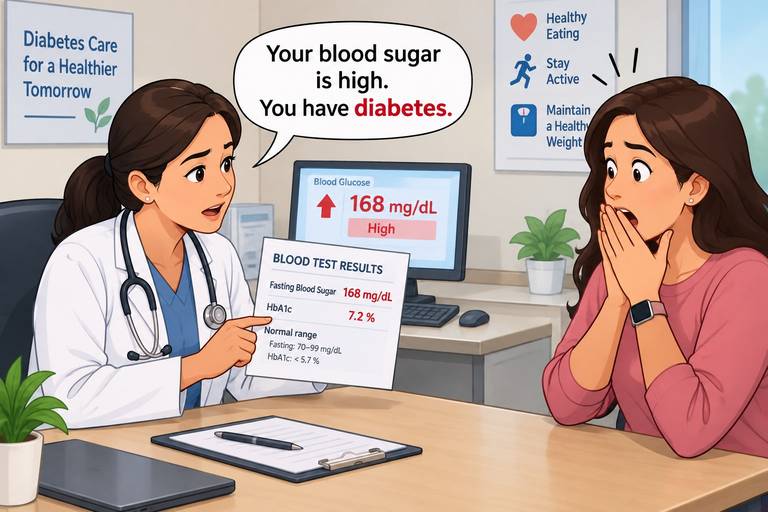
“Your blood sugar is high. You have diabetes.”
You are shocked.
“Diabetes? How? I was completely fine last week!”
That question is actually very common.
You may even ask:
“Can someone really develop diabetes suddenly?”
Your doctor then asks you another question:
“When was the last time you had your blood sugar checked?”
You think about it.
Five years?
Maybe more.
“I don't think I've ever had it checked.”
And suddenly, another question comes to your mind:
“Doctor, does that mean I've had diabetes for the last five years?”
The answer may surprise you.
Not necessarily.
You may not have had diabetes for all those years. But it is possible that your blood sugar had been gradually moving in the wrong direction without producing noticeable symptoms.
You may have been in a stage called prediabetes.
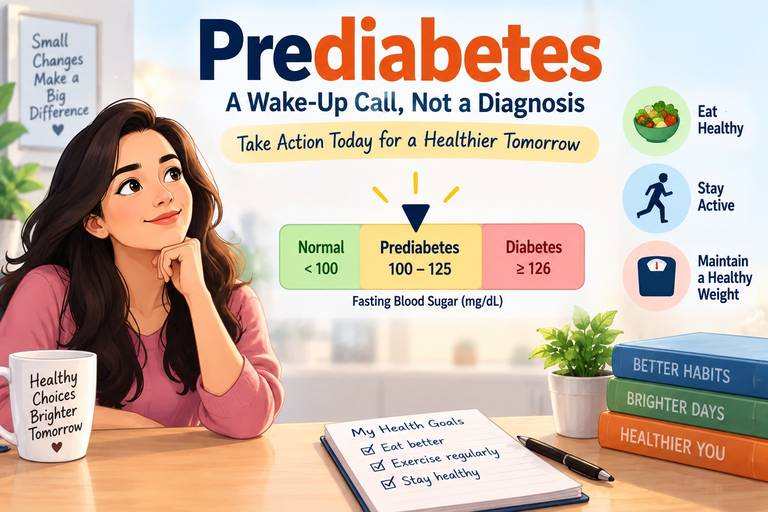
What Is Prediabetes?
Prediabetes is a state in which your blood sugar levels are higher than normal, but not yet high enough to meet the diagnostic criteria for diabetes.
Think of it as a warning signal from your body.
You may feel completely normal.
You may have no fatigue, no excessive thirst, no frequent urination—and no idea that your blood sugar is beginning to rise.
That is what makes prediabetes so important.
You can feel perfectly healthy while metabolic changes are already taking place.
Without appropriate lifestyle changes and, when needed, medical intervention, some people with prediabetes go on to develop type 2 diabetes.
So when diabetes is finally diagnosed, it can feel as though it appeared overnight.
But the diagnosis and the disease process are not necessarily the same thing.
The diagnosis may be sudden. The underlying changes may have been developing silently for years.
That’s why understanding prediabetes matters. Knowing your blood sugar before diabetes develops gives you a chance to act early. Learn when to get tested, what your numbers mean, and what you can do next.
How Common Is Prediabetes in the United States?
Prediabetes is extremely common.
According to the CDC (Centers for Disease Control and Prevention), approximately 115.2 million American adults—more than 2 in 5 adults—have prediabetes.
Even more concerning, approximately 8 in 10 adults with prediabetes do not know that they have it.
This is one reason routine screening is important.
You don't have to wait until you develop symptoms to find out that your blood sugar is abnormal.
Who Should Be Tested for Prediabetes or Diabetes?
Diabetes can develop silently.
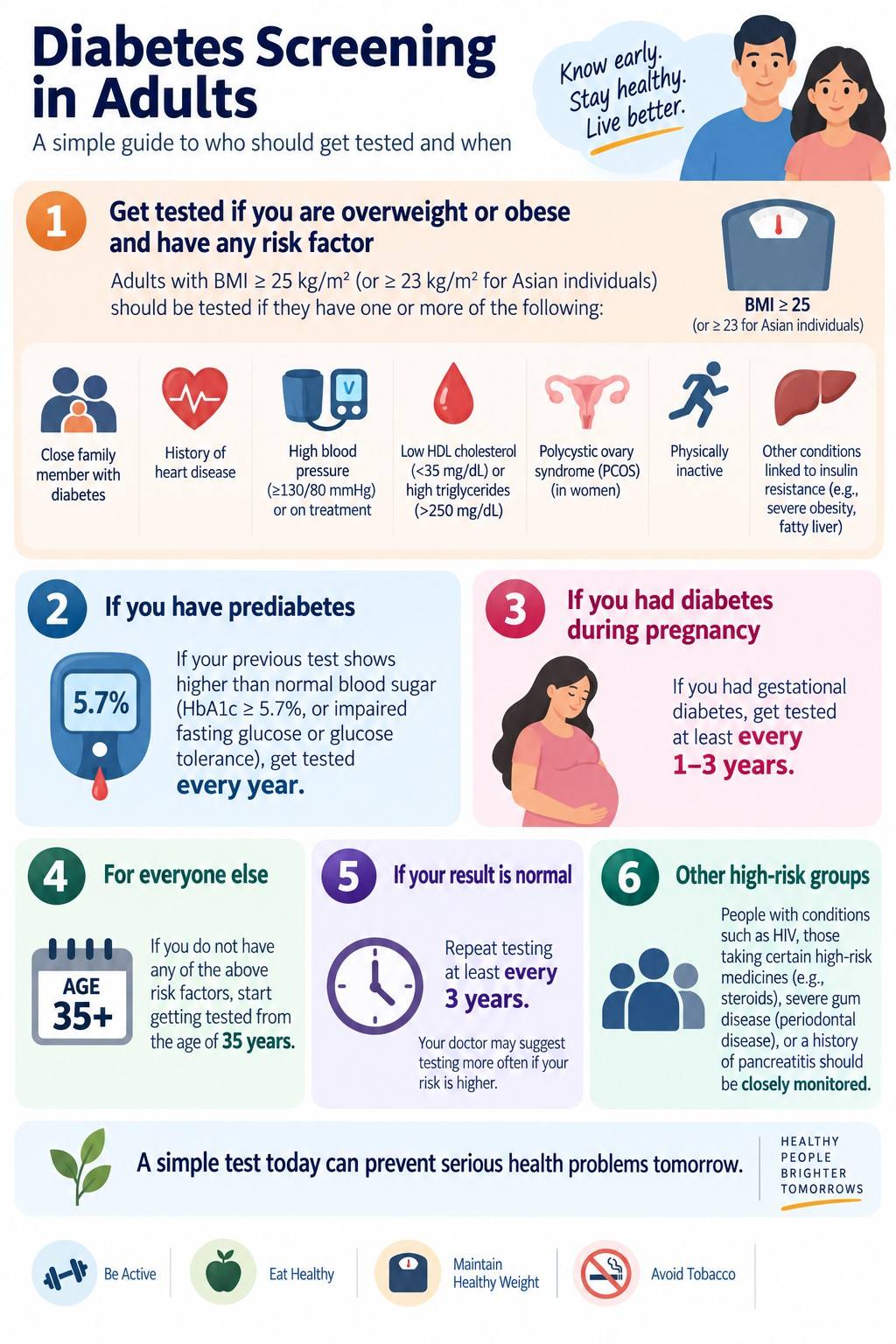
The American Diabetes Association recommends risk-based screening in adults and identifies several situations in which testing should be considered.
1. If You Are Overweight or Have Obesity and Have Risk Factors
For screening purposes, the ADA uses a BMI threshold of:
- 25 kg/m² or higher for many adults
- 23 kg/m² or higher for people of Asian ancestry
If you are above these thresholds, testing is particularly important when additional risk factors are present.
These include:
- A parent, brother, or sister with diabetes
- High blood pressure or being on treatment for hypertension
- A history of cardiovascular disease
- Abnormal cholesterol or triglyceride levels
- Polycystic ovary syndrome (PCOS)
- Physical inactivity
- Severe obesity
- Fatty liver disease
2. If You Already Have Prediabetes
If you have been diagnosed with prediabetes, annual testing is generally recommended.
The ADA recommends that people with prediabetes be tested for diabetes at least once a year.
Your doctor may recommend more frequent testing depending on your glucose levels and other risk factors.
3. If You Had Gestational Diabetes
Women who develop diabetes during pregnancy have an increased risk of developing type 2 diabetes later in life.
The ADA recommends ongoing testing at least every 1–3 years after gestational diabetes.
4. Even Without Risk Factors, Screening Should Start at Age 35
For adults without the above risk factors, the ADA recommends that screening begin at age 35.
If the result is normal, repeat testing at least every 3 years is reasonable, although your healthcare professional may recommend testing sooner if your risk changes—for example, because of weight gain or other new risk factors.
What Tests Can Detect Prediabetes?
There are three commonly used tests:
A1C
The A1C test estimates your average blood glucose over approximately the previous 2–3 months.
Prediabetes: 5.7%–6.4%
Fasting Plasma Glucose
This measures your blood glucose after fasting.
Prediabetes: 100–125 mg/dL (5.6–6.9 mmol/L)
Oral Glucose Tolerance Test
After drinking a standardized 75-g glucose solution, your blood glucose is measured at 2 hours.
Prediabetes: 140–199 mg/dL (7.8–11.0 mmol/L)
These are the current ADA 2026 criteria for prediabetes in nonpregnant individuals.
| Test | Normal* | Prediabetes | Diabetes |
|---|---|---|---|
| A1C | <5.7% | 5.7–6.4% | ≥6.5% |
| Fasting glucose | <100 mg/dL | 100–125 mg/dL | ≥126 mg/dL |
| 2-hour OGTT | <140 mg/dL | 140–199 mg/dL | ≥200 mg/dL |
* Laboratory interpretation and diagnosis should be confirmed by a healthcare professional, particularly when results are abnormal.
Why Should You Take Prediabetes Seriously?
Prediabetes is important because it indicates an increased risk of developing type 2 diabetes and cardiovascular disease.
The risk is not an all-or-nothing phenomenon. It increases progressively as glucose and A1C levels rise, with higher levels within the prediabetes range generally associated with greater risk.
If type 2 diabetes develops and remains poorly controlled over time, persistently elevated blood glucose can contribute to complications involving the:
- Heart
- Brain and blood vessels
- Eyes
- Kidneys
- Feet and nerves
Diabetes can also increase the risk of serious foot problems, including ulcers and, in severe cases, loss of toes, feet, or legs.
Moreover, if you are a diabetic patient requiring surgery
, presence of uncontrolled diabetes further complicates the surgical condition.
Prediabetes is therefore an opportunity to act before diabetes and its complications develop.
The Good News: Type 2 Diabetes Can Often Be Prevented or Delayed
A diagnosis of prediabetes does not mean that you are destined to develop diabetes.
The CDC notes that healthy eating, increased physical activity, and weight loss can substantially reduce the risk of progressing to type 2 diabetes.
The ADA also recommends evidence-based lifestyle interventions for people with prediabetes who are at elevated risk.
1. Aim for Modest Weight Loss if You Are Overweight
You do not need to lose a dramatic amount of weight to start making a difference.
ADA recommends a weight loss goal of approximately 5%–7% of your initial body weight.
For example, if you weigh 200 pounds:
- 5% = 10 pounds weight loss
- 7% = 14 pounds weight loss
Even modest weight loss can be meaningful when combined with regular physical activity and a healthy eating pattern.
2. Become More Physically Active
A practical goal is approximately 150 minutes of moderate-intensity physical activity per week (as per ADA), such as brisk walking.
You don't have to do it all at once.
For example:
30 minutes × 5 days = 150 minutes/week
Strength training can also be incorporated into your weekly routine.
If you have been inactive, start gradually and choose activities that are realistic for you.
3. Make Your Diet More Diabetes-Friendly
There is no single diet that works for everyone.
Instead, focus on an eating pattern that you can maintain long term.
Choose more:
- Vegetables
- Whole fruits
- Whole grains
- Beans and legumes
- High-fiber foods
- Nuts and seeds
- Healthy sources of protein
- Unsaturated fats
Try to limit:
- Sugar-sweetened beverages
- Highly processed foods
- Refined carbohydrates
- Excess calories
- Foods high in saturated fat
The goal is not a temporary crash diet.
The goal is to develop eating habits that you can continue for years.
4. Move More During the Day
Exercise does not only mean going to the gym.
Small changes can add up:
- Take a short walk after meals
- Use stairs when practical
- Take regular breaks from prolonged sitting
- Walk while talking on the phone
- Choose walking for short errands when possible
Consistency matters more than perfection.
What If Your Blood Sugar Is Already in the Prediabetes Range?
Don't ignore it—but don't panic either.
Prediabetes is an opportunity to identify your risk early and do something about it.
Talk with your healthcare professional about:
- Your A1C
- Fasting glucose
- Weight and waist circumference
- Blood pressure
- Cholesterol and triglycerides
- Family history
- Physical activity
- Diet
- Your overall diabetes risk
For selected people at particularly high risk, healthcare professionals may consider medications such as metformin in addition to lifestyle intervention. The decision should be individualized.
Can Prediabetes Go Back to Normal?
Yes.
Some people with prediabetes can return to normal blood glucose levels, particularly after making sustained changes in weight, diet, and physical activity.
However, having a normal test later does not mean that your future risk has disappeared.
Continued healthy habits and appropriate follow-up remain important.
The Bottom Line
Prediabetes is a warning sign—but it is also a window of opportunity.
You may have prediabetes without feeling sick or having any obvious symptoms.
If you are at increased risk, ask your healthcare professional whether you should be tested.
If you already have prediabetes, don't wait for diabetes to develop.
Know your numbers. Move more. Eat better. Maintain a healthy weight. Follow up regularly.
Taking action today can help protect your health in the years ahead.
Frequently Asked Questions
Is prediabetes the same as diabetes?
No. Prediabetes means blood glucose is above the normal range but below the diagnostic threshold for diabetes.
Can I have prediabetes without symptoms?
Yes. Most people with prediabetes do not have obvious symptoms, which is why screening is important.
Does prediabetes always become diabetes?
No. Prediabetes does not inevitably progress to diabetes. Risk varies between individuals, and lifestyle intervention can reduce the risk of progression.
Can I reverse prediabetes?
Some people can return their glucose levels to the normal range through weight management, healthy eating, physical activity, and other lifestyle changes. Continued monitoring is still important.
Do I need to fast for an A1C test?
No. An A1C test generally does not require fasting. Fasting is required for a fasting plasma glucose test.
How often should I be tested if I have prediabetes?
The ADA recommends testing for diabetes at least annually in people with prediabetes.
What should I do if my A1C is 6.4%?
An A1C of 6.4% falls within the ADA's prediabetes range. Discuss the result with your healthcare professional, who can determine whether additional testing or follow-up is appropriate and help you develop a prevention plan.
Medical Disclaimer
This article is intended for general educational purposes and is not a substitute for individualized medical advice, diagnosis, or treatment. Blood glucose results should be interpreted by a qualified healthcare professional in the context of your overall health. If you have concerns about diabetes or prediabetes, speak with your doctor or other qualified healthcare professional.