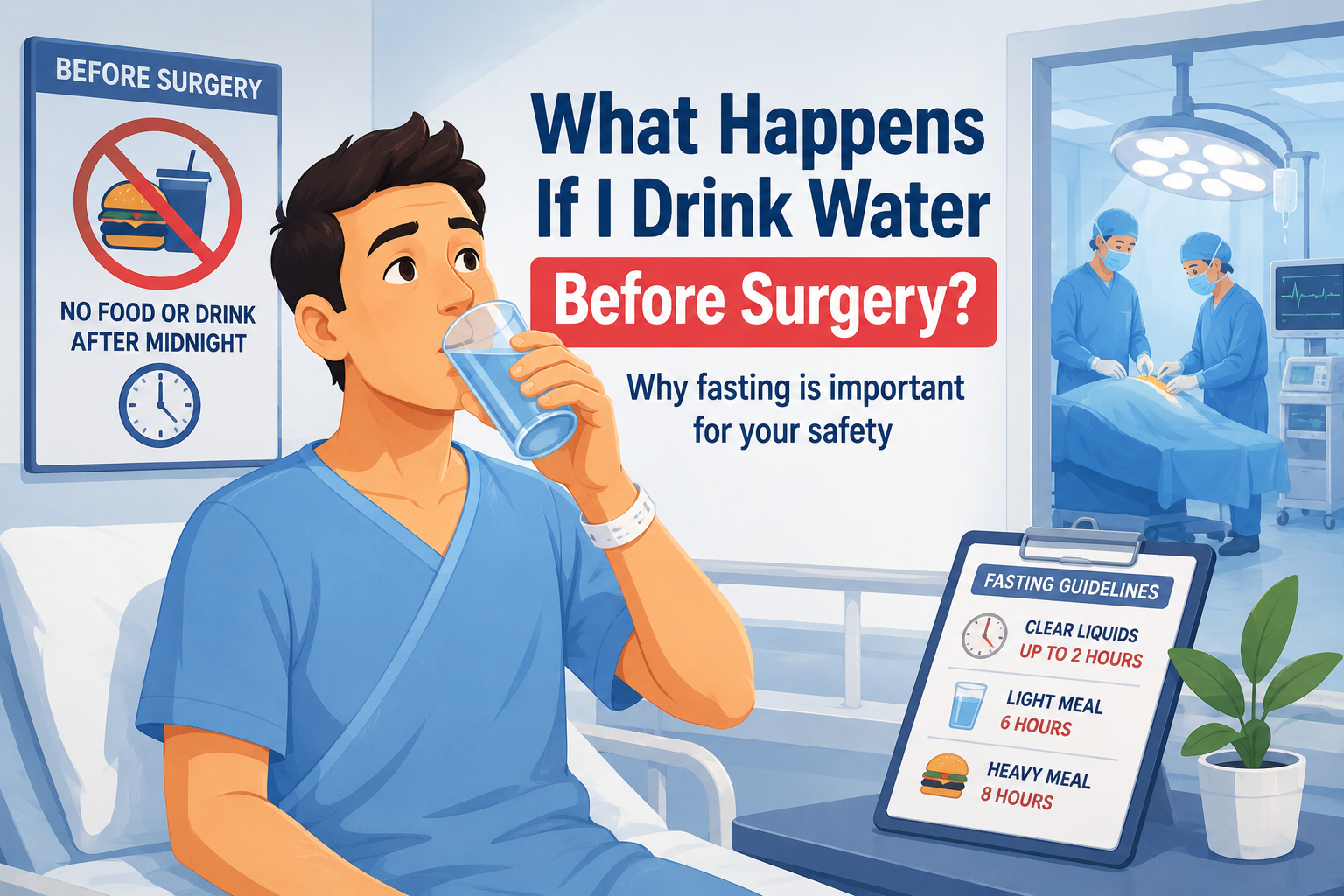
If you're scheduled for surgery, you've probably heard your doctor or nurse say:
"Nothing to eat or drink after midnight."
But have you ever wondered why fasting before surgery is so important? And what happens if you accidentally drink water before your procedure?
Let's break it down in simple terms.
Surgery Is More Than Just the Operation
When you undergo surgery, two important things happen:
- The surgeon performs the procedure.
- The anesthesia team keeps you comfortable, pain-free, and safe throughout the operation.
To make surgery possible, anesthesia medications relax your body and often put you into a deep sleep. While this is essential for surgery, it also temporarily turns off some of your body's natural protective mechanisms.
Your Body's Natural Protection Against Vomiting
When you're awake and accidentally vomit, your body has several built-in reflexes that help prevent stomach contents from entering your lungs.
These protective reflexes include coughing, swallowing, and closing off the airway.
Under anesthesia, however, these reflexes are reduced or completely absent.
If stomach contents come back up during surgery, they can enter the lungs instead of being coughed out. This is known as pulmonary aspiration.
Why Is Aspiration Dangerous?
Aspiration can lead to serious complications, including:
- Severe lung inflammation
- Aspiration pneumonia
- Respiratory failure
- Need for intensive care (ICU) admission
- Prolonged ventilator support
- Longer hospital stays
- Increased medical costs
- In rare cases, death
Because of these risks, anesthesiologists take fasting guidelines very seriously.
Why Fasting Before Surgery Matters
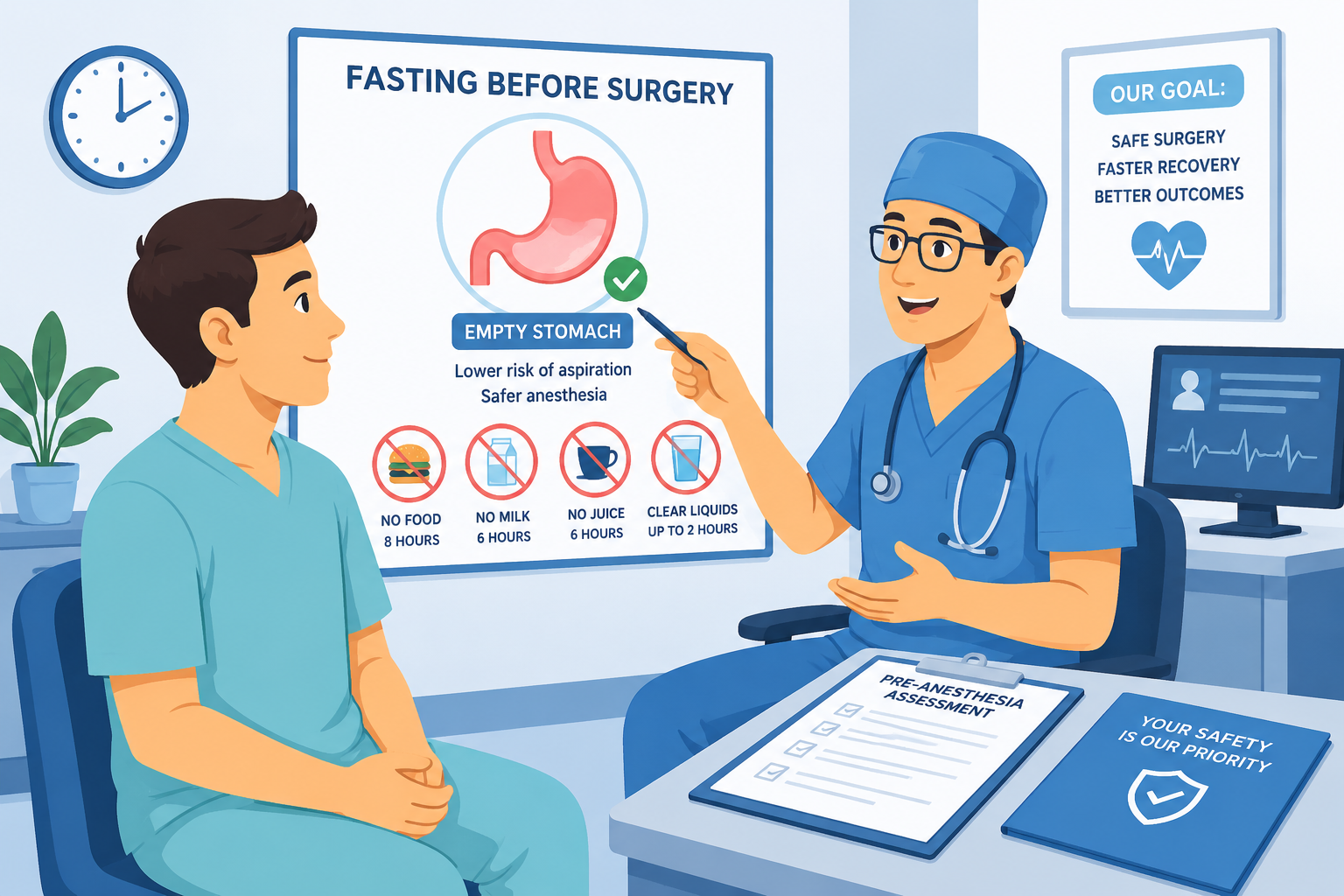
The more food or liquid that remains in the stomach, the greater the risk of vomiting and aspiration during anesthesia.
Fasting gives the stomach enough time to empty before surgery, making anesthesia significantly safer.
What If I Drink Water Before Surgery?
Many patients worry after taking a sip of water before their procedure.
The good news is that clear liquids leave the stomach relatively quickly. In most healthy adults, clear liquids are generally allowed up to 2 hours before anesthesia.
However, if water or another drink was consumed too close to the scheduled surgery time, your anesthesia team may decide to delay the procedure to maintain safety.
What If I Ate a Full Meal?
A full meal is a different situation.
Food remains in the stomach much longer than water. If a patient eats shortly before an elective surgery, the procedure will often need to be postponed until adequate fasting time has passed.
While delays can be frustrating, patient safety always comes first.
What Happens in an Emergency?
Sometimes surgery cannot wait.
In emergency situations, doctors may need to proceed even when a patient has not fully fasted. When this happens, the anesthesia team uses special techniques and precautions to reduce the risk of aspiration as much as possible.
Patients and their families are informed about the additional risks whenever possible.
Always Tell Your Doctor If You Ate or Drank Something
One of the most important things you can do is be honest with your healthcare team.
If you accidentally ate, drank, chewed gum, or had coffee before surgery, tell your anesthesiologist or nurse immediately.
A short delay is far safer than hiding the information and risking a serious complication.
Remember:
Your anesthesia team is not trying to cancel your surgery—they are trying to keep you safe.
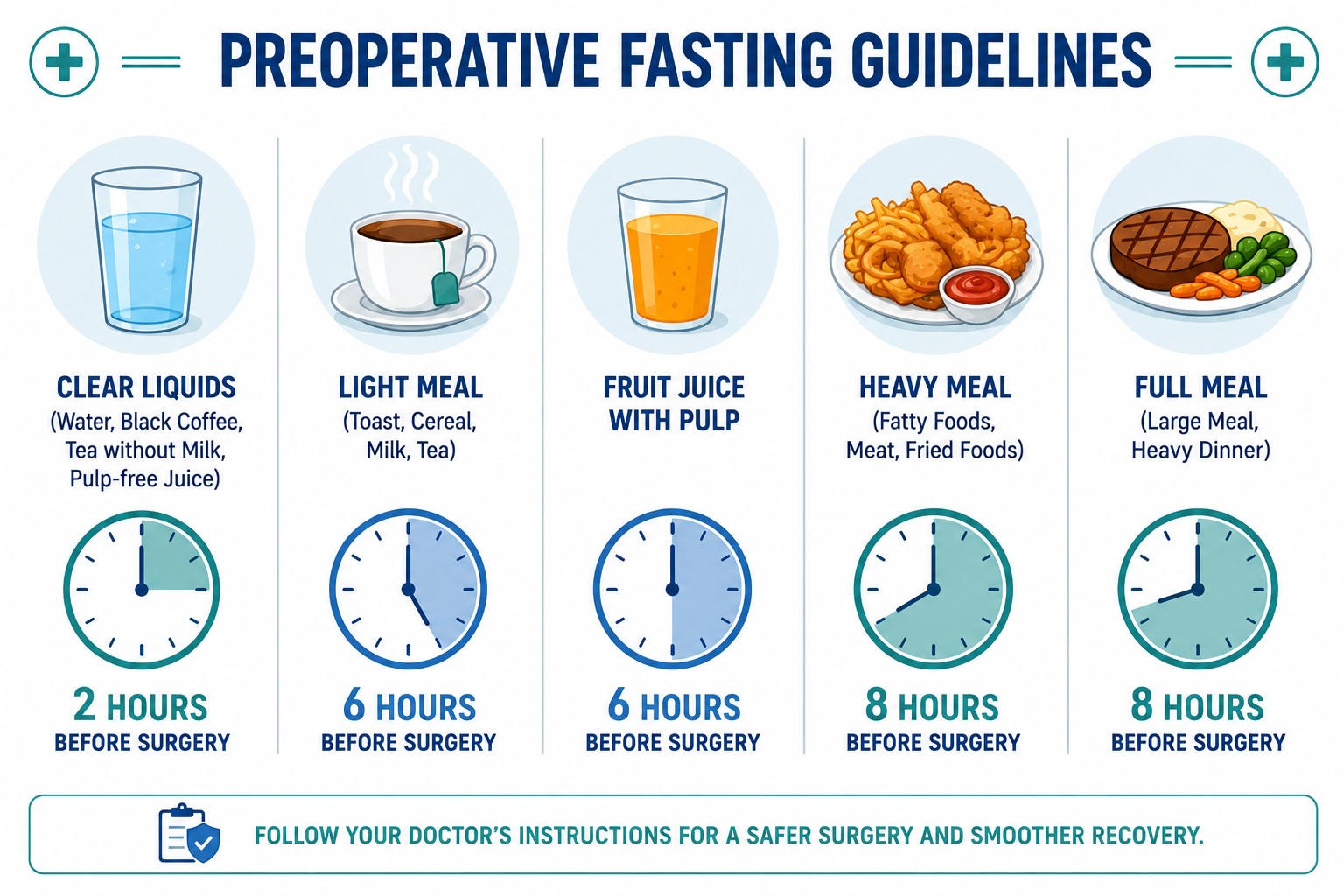
Common Preoperative Fasting Guidelines
| What You Consumed | Minimum Fasting Time |
|---|---|
| Heavy meal (fatty foods, meat, fried foods) | 8 hours |
| Light meal (toast, cereal, milk, tea) | 6 hours |
| Fruit juice with pulp | 6 hours |
| Clear liquids (water, black coffee, tea without milk, pulp-free juice) | 2 hours |
The Bottom Line
Preoperative fasting isn't just a hospital rule—it's an important safety measure designed to protect your lungs and reduce complications during anesthesia.
Following fasting instructions carefully can help ensure:
- A safer anesthetic
- Fewer complications
- Faster recovery
- Shorter hospital stay
- Better overall surgical outcomes
Fast well today for a smoother recovery tomorrow.
Frequently Asked Questions (FAQs) About Anesthesia
Can I Take My Morning Medications with Water?
Generally, continuing medications before surgery depends on the surgeon and anesthesiologist. If they advise you to continue your regular medications, you should do so. For morning surgeries, medications can usually be taken up to 2 hours before surgery with 1–2 sips of water to help swallow the medicine.
If less than 2 hours remain before surgery, discuss with your healthcare team whether the medication should still be taken.
What About Chewing Gum, Candy, or Smoking?
Ideally, you should remain nil by mouth (NPO) for the period advised before surgery. Chewing gum or candy may be consumed before the fasting period begins but should be avoided once fasting starts.
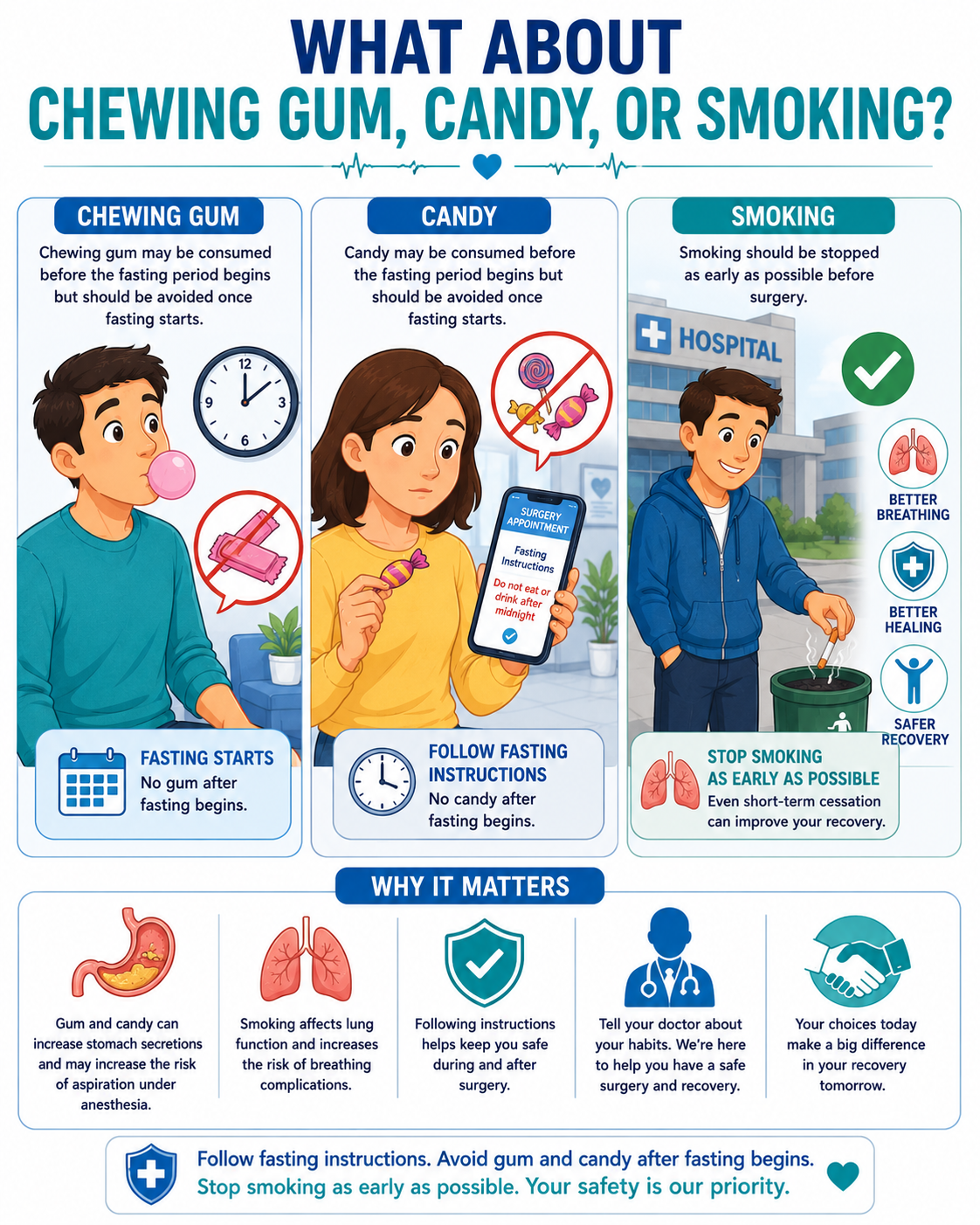
Smoking should be stopped as early as possible before surgery. Even short-term smoking cessation can improve lung function, wound healing, and postoperative recovery.
Why Do Children Have Different Fasting Rules?
Children cannot tolerate prolonged fasting as well as adults. Therefore, fasting guidelines are slightly modified:
- Breast milk: 4 hours before surgery
- Infant formula: 6 hours before surgery
- Other fasting recommendations are generally similar to adults
Can I Brush My Teeth Before Surgery?
Yes. In fact, it is recommended that you brush your teeth before surgery. Just avoid swallowing water while brushing.
Do You Sleep All Day After Anesthesia?
Not usually. Recovery depends on the type of anesthesia, duration of surgery, and individual patient factors.
For spinal anesthesia, patients generally remain awake during surgery and recover quickly afterward.
For general anesthesia, patients usually wake up shortly after surgery ends. Some drowsiness is normal, especially after long procedures. Elderly patients and young children may remain sleepy for a longer period because they are more sensitive to anesthetic medications.
Do They Cover Your Private Parts During Surgery?
Yes. After anesthesia is administered, the surgical team cleans and prepares only the area being operated on. The rest of the body, including private areas, is covered with sterile drapes unless surgery involves those regions.
How Many Hours Do You Sleep During General Anesthesia?
The duration of anesthesia depends entirely on the duration of surgery. It may last as little as 30 minutes or extend for many hours during complex procedures such as transplant, brain, or cardiac surgeries.
What Is the Biggest Risk of Anesthesia?
Modern anesthesia is extremely safe due to advanced monitoring systems, medications, and equipment. The overall risk largely depends on the patient's health status and the complexity of the surgery.
For healthy patients undergoing elective surgery, serious anesthesia-related complications are very rare.
Are You Almost Dead Under Anesthesia?
No. General anesthesia is a medically induced and carefully monitored state of unconsciousness. It is not the same as death.
During anesthesia:
- Your heart continues beating.
- Blood continues circulating throughout your body.
- Your breathing is supported and monitored.
- Your body functions are continuously observed.
Anesthesia provides reversible loss of consciousness, pain sensation, memory, and reflexes, allowing surgery to be performed safely.
How Do They Wake You Up from Anesthesia?
At the end of surgery, the anesthesiologist stops administering anesthetic medications. As the drugs wear off, consciousness gradually returns.
Additional medications may be given to reverse muscle relaxation and ensure normal breathing and movement before awakening.
Modern monitoring technology allows anesthesiologists to assess anesthetic depth and safely guide patients through recovery.
What Does Anesthesia Do to Your Brain?
Anesthetic drugs temporarily alter brain activity to create a controlled state of unconsciousness. During this state:
- You are unaware of your surroundings.
- You do not feel pain.
- You do not form memories of the procedure.
- Your body remains relaxed for surgery.
Once the anesthetic medications are discontinued, normal brain function gradually returns.
How Can I Stay Calm Before Anesthesia?
Feeling anxious before surgery is common. Several strategies may help:
- Discuss your concerns with your surgeon and anesthesiologist.
- Learn about the procedure and recovery process.
- Practice relaxation techniques such as deep breathing.
- If needed, your doctor may prescribe medications to reduce anxiety before surgery.
What Happens If You Don't Wake Up from Anesthesia?
Failure to wake up after anesthesia is extremely rare, particularly in healthy patients undergoing elective surgery.
Modern anesthesia involves continuous monitoring of heart function, breathing, oxygen levels, blood pressure, and brain activity. These technologies make prolonged unconsciousness due solely to anesthesia very uncommon.
However, recovery may be delayed in critically ill patients, such as those with severe head injuries, septic shock, major blood loss, or pre-existing coma. In such cases, postoperative recovery depends more on the underlying medical condition than on the anesthetic drugs themselves.
Disclaimer: This article is for educational purposes only and should not replace professional medical advice. Always follow the recommendations of your surgeon, anesthesiologist, and healthcare provider regarding preoperative fasting guidelines.